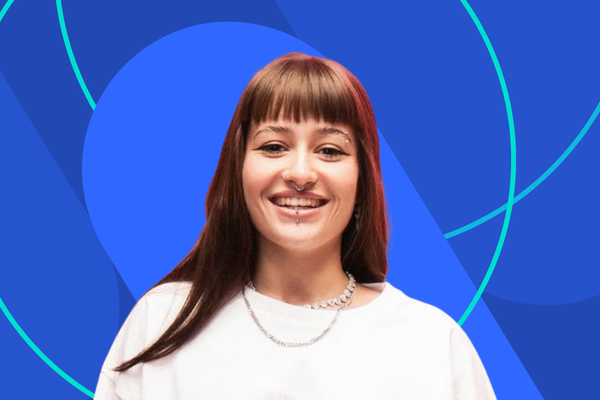

Challenging Porn Culture: Katie Ramsay on Youth, Consent, and the Digital Age

For many young people today, pornography isn’t something hidden behind a paywall or stumbled upon accidentally—it’s woven into the cultural landscape, shaping conversations about sex, relationships, and identity from an early age.
Katie Ramsay, a content creator with more than 230,000 YouTube subscribers to her channel @Katiclyzm, has become one of a growing number of young voices questioning that influence. Through her videos and online platforms, she offers a critical analysis of pornography’s harmful cultural and social impact, examining its influence on mainstream media, intimacy, youth sexualization, and violence against women. Her conversations explore how pornography reshapes perceptions of consent and personal boundaries. Through her online platforms, Katie aims to foster informed dialogue and build a community dedicated to understanding the broader implications of the multi-billion-dollar porn industry.
Katie will join Ashley Staggers, another young activist standing up to the porn industry, at a special webinar on March 19, 2026. They’ll share what it’s like to grow up in a culture saturated by porn and the difficulty of navigating relationships in this landscape. Learn more and sign up to join the conversation here.
We caught up with Katie to learn more about what inspired her to speak out, what she’s learned from her hundreds of thousands of followers, and her goals for a healthier sexual culture.
What inspired you to host public discussions on these critical and controversial topics?
I came across pornography at the age of 13, when a friend introduced it to me. Growing up, the majority of the people I was around were very pro-porn. There was no one in my life telling me that porn was an inaccurate representation of sex, only people talking casually about their consumption of it. This misunderstanding severely altered my view of sex and intimacy, blurring my own ideas about consent and personal boundaries, which caused me issues throughout my teenage years and into adulthood.
Pornography made me feel uncomfortable. Because everyone around me normalized it, I was made to feel like my hatred of porn was odd. I didn’t meet a single person who shared my beliefs. My distaste for it intensified when I was in a relationship with someone who was addicted to pornography, and I realized, as Gail Dines would say, that pornography has severely hijacked our sexualities.
I want to change the narrative so that instead of being the odd one out for condemning the porn industry, we condemn those who defend, consume, and promote the industry.
I want to be a voice for my generation, someone people can look to to feel less alone about hating porn, and feel less alone in hating an industry that profits from abuse and misogyny, normalizes violence against women, promotes rape culture, and seeps into our day-to-day lives. I want to change the narrative so that instead of being the odd one out for condemning the porn industry, we condemn those who defend, consume, and promote the industry.
What do your viewers say are the biggest concerns and overall feelings about our current porn culture?
So many young women reach out to tell me how porn has impacted their relationships. They tell me their boyfriend can’t stop watching it, how it’s ruined their self-esteem, how young boys are essentially indoctrinated into believing porn is a right of passage, a part of coming-of-age. I have young men message me saying they don’t know how to stop, how porn has always been a vital part of their lives, their routines, their male identity. I have people telling me their boyfriends violated them during sex by copying what they saw in pornography.
I see a pattern: Young people consuming pornography, rewriting their idea about women and their boundaries, teaching young people that ‘no’ isn’t a word you should use during sex, and that ‘yes’ to everything is the sexiest thing a girl can do. I see people struggle to come to terms with the fact that their trauma is a porn category, and I think we are seeing young people become desensitised to sexual violence. I mean, after all, how is a man to show empathy to a rape victim if they’re masturbating to non-consensual pornography? Sexual intimacy has been pornified, and these days sex is merely a performance, a copycat of a porn set.
How did you discover Dr. Gail Dines? What about her work and Culture Reframed interested you?
I found Gail through her TED Talk on YouTube when I first started to explore the porn industry. I knew that surely there had to be other people who shared my views. When I watched that TED Talk, honestly, I felt like I was going to cry. For so long, I had felt like I was alone with my views, especially online. My critiques of the sex trade and porn had brought me nothing but death threats, rape threats, or allegations of misogyny. Finding not only someone I agreed with, but someone as knowledgeable as Gail Dines, was so refreshing and, for once, made me feel hopeful. I asked her to appear on my channel, which she did. My viewers appreciated her point of view as much as I did. I love what Culture Reframed does. It’s brilliant to see an organization actually care about our children and future generations.
What do you think parents, educators, lawmakers, etc. should be doing differently to help support young women affected by porn culture?
Parents need to know what’s out there. Take one look at a porn site and ask yourself if this is something you want your child to see, to learn, to think is normal. Age-appropriate conversations need to be had with children about what they will come across, because it’s not if they will come across it, it’s when. If your kid has a phone that has the internet, they can access porn. Talk to your child about porn the same way you speak to them about not smoking. Teach your child that pornography is bad, not something that ‘boys just do.’
Parents need to know what’s out there. Take one look at a porn site and ask yourself if this is something you want your child to see, to learn, to think is normal.
When it comes to sex, the education system is abysmal. I am proof of that. We weren’t taught about porn. It was never even mentioned. Schools need to teach mandatory porn-critical sex education, instead of acting like it doesn’t exist. If we genuinely want to tackle the ever-growing manosphere that appeals to young men, we need to look at the core issues.
What does a healthier sexual culture in the future look like? How can we move forward and change the status quo?
There are not enough people speaking out against porn, and truthfully, I think it’s because a lot of people are too scared to. It’s somehow now seen as progressive to be pro-porn and pro-sex trade. I think young women are afraid to talk about it because of the backlash. But I think that can change.
I hope that soon we see more young people rejecting porn, seeing the harm it causes, and advocating for porn-critical education to be mandatory, as well as rewriting society’s acceptance of such an exploitative industry. It baffles me that it’s now controversial to be anti-porn, and it’s particularly concerning that many people believe hating porn equals hating sex.
I hope we have a future where sex isn’t a product, women’s bodies can’t be commodified, and young people are being educated, enlightened, and empowered. That is when we will have true sexual liberation.
I hope we have a future where sex isn’t a product, women’s bodies can’t be commodified, and young people are being educated, enlightened, and empowered. That is when we will have true sexual liberation.