What Young Women Are Saying About Growing Up in a Pornified Culture

Highlights from a Culture Reframed Webinar with Dr. Gail Dines, Dr. Mandy Sanchez, Ashley Staggers, and Katie Ramsay
Young women are on the front lines of a culture saturated by pornography, yet their perspectives are often overlooked or dismissed. What does it actually feel like to grow up in this environment, and how is it shaping relationships, identity, and expectations around intimacy?
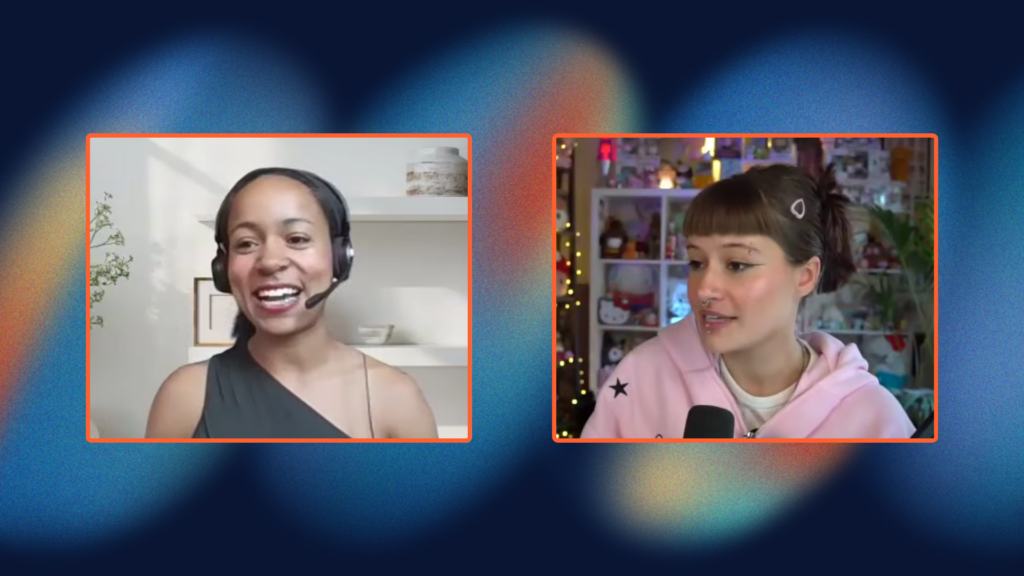
These were the questions at the center of Culture Reframed’s recent webinar, Let’s Talk Porn: Young Women Speak Out Against Porn Culture, moderated by founder and CEO Dr. Gail Dines and Director of Programming, Dr. Mandy Sanchez. The conversation featured two young activists who are helping shift how we understand the impact of pornography on girls and women.
Ashley Staggers, Miss Manhattan 2026, brings experience in youth leadership, sexual violence prevention, and survivor advocacy through her work with organizations including Rights4Girls and the World Without Exploitation Youth Coalition. She was joined by Katie Ramsay, a content creator with more than 230,000 YouTube subscribers, known for her critical analysis of pornified culture and hypersexualized media.
Together, they offered an unfiltered look at what it means to come of age in a pornified culture and why listening to young people is essential to understanding both the problem and the path forward.
What “Normalization” Actually Looks Like for Young People
It was strange to not watch pornography. You were the odd one out. Everybody around me was doing it, and I didn’t question it.
When we talk about the “normalization” of pornography, it’s easy to imagine young people actively seeking it out. But for many, that’s not how it starts — or how it operates today.
This normalization often begins early. By middle school, watching pornography is often treated as a social expectation. As Ramsay recalled, “It was strange to not watch pornography. You were the odd one out. Everybody around me was doing it, and I didn’t question it.”
You don’t actually need to go to a porn site to see porn.
But pornography today isn’t confined to explicit websites. It’s embedded across social media, streaming platforms, video games, and everyday digital life. “You don’t actually need to go to a porn site to see porn,” Staggers explained.
The result isn’t just access — it’s immersion. Porn is a critical part of young people’s landscape; it’s part of the environment shaping what young people come to expect from relationships, sex, intimacy, and themselves.
The Hidden Impact on Relationships, Desire, and Identity
The impact of a pornified culture isn’t abstract. It shapes how young people understand relationships, intimacy, and their own desires. Sex is increasingly framed as something performative and transactional rather than mutual. Panelists described pressure to be what pornographer Joanna Angel describes as “porn-ready” — to mimic the porn images they are exposed to, rather than what feels authentic.
“We’re being shown that we should be excited about things like being tied up or choked… and if you’re not, what’s wrong with you?” said Staggers.
Emotionally, the speakers described a disconnect between their own desires and their sexual behavior. As Dines explained, moments of sexual attention can make someone feel like “the most visible thing in the world,” but only temporarily. Together, these dynamics create a culture where confusion, pressure, and the unspoken need to conform are common.
At the same time, consent becomes harder to define. Porn often models intimacy where boundaries are pushed or ignored. As a result, harmful experiences don’t always register as harm.
Consent in a Pornified Culture
Consent is often framed as a simple yes or no, but in a pornified culture, it isn’t. When young people are taught that sex is expected and refusal is seen as out of the norm, consent becomes less about what someone says and more about what they feel able to say
“Does consent truly exist in a system which doesn’t allow you to actually say no?” said Staggers.
Saying no can carry consequences: loss of attention, social backlash, and even safety risks. Compliance can feel easier than resistance. At the same time, said Staggers, there’s internal conflict: “What are my actual desires versus how do I make you happy?”
This reflects what guests described as the “pornification of intimacy,” where sex becomes something done to someone, not shared.
Why Adults Are Missing It
Young people aren’t the only ones struggling to navigate this landscape; adults are often unequipped to understand it. This has been referred to as the “parenting naïveté gap”: the disconnect between what kids are experiencing and what adults think they are.
That gap becomes most visible when young people reach out for help.
Ramsay described being assaulted and seeking support, only to be blamed and dismissed. “That was my first experience of opening up… and I was met with victim blaming.”
Many adults simply don’t have the language or conceptual framework to recognize what’s happening. The result: Young people are navigating a pornified culture largely on their own, without guidance.
What Unlearning Looks Like (and Why It Matters)
If these norms, behaviors, and patterns are learned, they can be unlearned, but it takes intention. One starting point is reconnecting with your own desires. As Staggers described, this means asking: “What decision would you make if you weren’t considering anyone else?”
It also means questioning the media. And it requires collective awareness. Many young people process experiences with friends, but lack the language that describes the experiences of being sexually assaulted. This speaks to the lack of robust sex education in schools.
If you don’t know what sexual violence looks like, you won’t be able to help your friends.
“If you don’t know what sexual violence looks like,” said Staggers, “you won’t be able to help your friends.”
Unlearning isn’t just about rejecting harmful messages — it’s about rebuilding a clearer sense of self and more honest relationships.
What Young People Need from Adults
Young people don’t need perfect adults; they need present, informed, and non-judgmental ones. That means moving beyond a single “talk” and building ongoing, age-appropriate conversations over time. Shame and fear shut communication down. Curiosity and openness keep it going. Supporting young people means listening, paying attention, and creating space for honest conversation.
Where Do We Go From Here?
Despite the challenges, the conversation ended with momentum and hope, not despair. Education is foundational. Awareness is often the first turning point. And that awareness is growing, especially among young people, who are increasingly questioning the narratives they’ve been given.
The culture young people are growing up in isn’t inevitable. And it isn’t unchangeable. But shifting it will require exactly what this conversation modeled: honesty, courage, and a willingness to act.
Young people didn’t choose to grow up in a pornified culture. But they are living in it — and making sense of it — every day. Adults can’t afford to look away.
Watch the full webinar, Let’s Talk Porn: Young Women Speak Out Against Porn Culture, to learn more: